
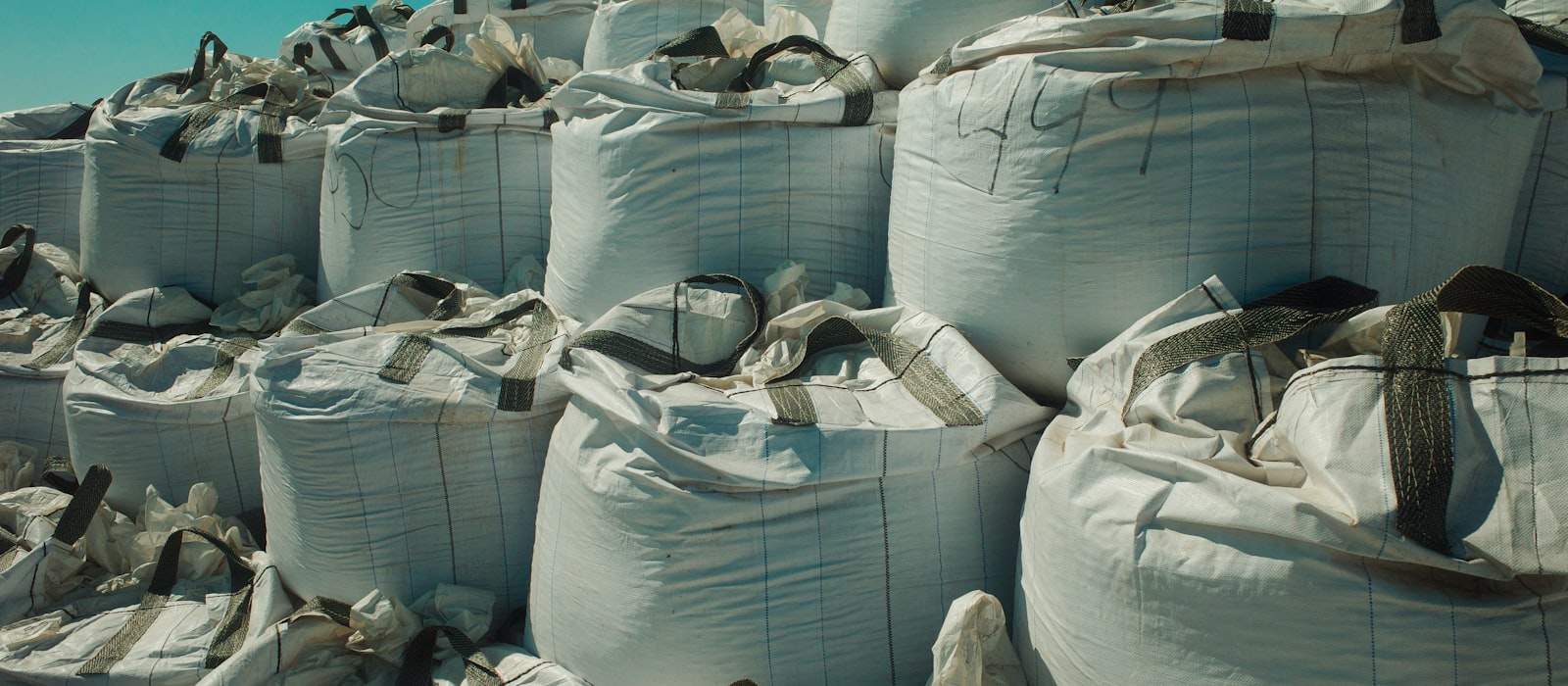
Big Bag / FIBC
A big bag (FIBC) is a large-volume woven polypropylene sack used for exporting bulk products. With standard, laminated, lined, food grade and antistatic options, it offers a solution suited to every bulk cargo profile.
What Is a Big Bag / FIBC?
A big bag (FIBC — Flexible Intermediate Bulk Container) is a large-volume woven polypropylene (PP) sack with lifting loops, designed for transporting and storing bulk or semi-bulk solid products. It is widely used for packaging bulk products such as fertilizer, grain, hazelnuts, mining ore, chemical granules and construction materials. PAKKORA's big bag / FIBC range is used across the agriculture, industrial, construction and logistics sectors, in a range of sizes and types.
Big Bag Types
PAKKORA's big bag / FIBC range is produced in the following types:
- Standard FIBC: The unlined, most widely used basic type; suitable for bulk products with low moisture sensitivity.
- Laminated FIBC: The inner surface is coated with a thin plastic film, reducing dust permeability and increasing moisture resistance.
- Lined FIBC: A separate inner bag (liner) is inserted inside the sack; preferred for fine-grained products that must not leak dust or are highly sensitive to moisture.
- Food Grade FIBC: Manufactured from food-contact-safe raw material; used for transporting grain, flour and other food raw materials.
- Antistatic (Type C) FIBC: Woven with conductive threads that discharge static electricity buildup through grounding; the grounding performance of this type of antistatic bag is defined by the international EN 61340-4-4 standard. Preferred for transporting products containing combustible dust.
Loop Count and Lifting Method
Big bags are produced with a single loop or four loops. The four-loop design provides balanced lifting from four points with a forklift or crane and is standard for large-volume, heavy bulk loads. Single-loop sacks, on the other hand, are generally used for smaller-volume products and in operations where single-point lifting is sufficient.
Filling and Discharge Spout Options
In terms of the top filling opening, big bags can be produced with no spout (flat top), a single spout or a double spout; in terms of discharge, they can be produced with a flat bottom (emptied by cutting open) or a bottom discharge spout. Spouted designs allow the bulk product to be transferred directly and in a controlled manner into a silo or processing line, while flat-bottomed sacks are generally preferred for applications emptied by hand or by cutting. Body constructions such as baffle (internal support panels) and U-panel designs help the sack keep its cube shape when full, improving stacking efficiency.
Certification for Hazardous Materials Transport
Big bags used to transport chemicals classified as hazardous or combustible dust are subject to the UN packaging certification system defined by the United Nations; this system requires the sack to pass drop, stacking and seal-integrity tests and to be assigned a UN code accordingly. This is the industry standard that determines which big bag is suitable for which hazard class — whether a specific big bag holds this certification is product-specific and must be verified against supplier documentation.
Stacking and Storage
Filled big bags should be stored without exceeding the maximum stacking height specified by the manufacturer, to prevent crushing of the sacks in the lower rows. Because UV exposure during prolonged outdoor storage can cause woven polypropylene to become brittle over time, storage under UV-stabilized fabric or a cover is recommended.
PP Woven Sacks: The Small-Scale Version of the Big Bag
Smaller-volume industrial sacks made from the same woven polypropylene material, with no loop or a single loop, are also common in uses such as fertilizer sacks, hazelnut sacks, feed sacks and agricultural sacks. Although they belong to the same material family as the big bag, they differ from the FIBC in handling method (by hand or by pallet) and in volume.
Choosing the Right Big Bag
Choosing the right type depends on the dust content and moisture sensitivity of the product to be transported, whether food contact is required, and the risk of static electricity. The filling and discharge spout configuration (top opening, bottom discharge, spout type) also directly affects operational efficiency; these options are covered in a separate configuration guide.
Loading into the Container
When loading filled big bags into a container, leaving no gaps between the sacks or between the sacks and the container wall reduces the risk of rolling or tipping during transport. For loads prone to sliding, securing pallets underneath with anti-slip rubber pads helps prevent the big bags from shifting inside the container.
Common Mistakes
- Choosing the wrong type: Using an unlined standard FIBC for a product sensitive to moisture or dust can lead to loss of product quality.
- Exceeding capacity: Filling the sack beyond its rated carrying capacity increases the risk of tearing at the loops or seam lines.
- Ignoring static risk: Using a standard (Type A) FIBC for products containing combustible dust creates a serious safety risk; in this case, the antistatic type is mandatory.
You may also need
Ready to order or need more detail?
Tell us your quantity and destination port — we reply with a quote.